Influencer Marketing in Nepal: A Guide for Brands That Want Sales, Not Screenshots
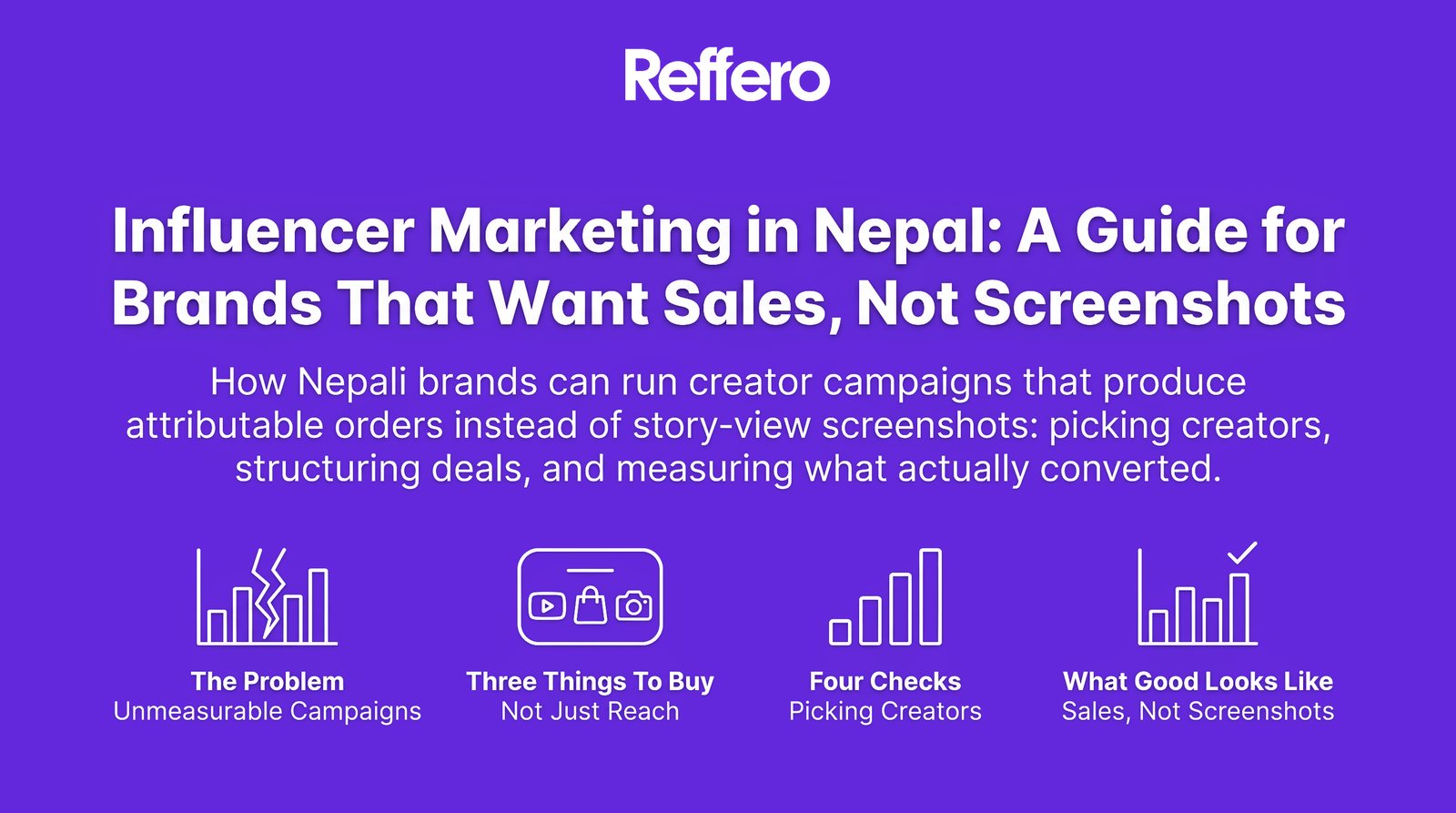
How Nepali brands can run creator campaigns that produce attributable orders instead of story-view screenshots: picking creators, structuring deals, and measuring what actually converted.
Every marketing manager in Kathmandu has some version of the same story: paid a creator with six-figure followers, got a burst of story views, a screenshot report, and no idea whether a single order came from it.
The conclusion many brands draw ("influencer marketing doesn't work in Nepal") is wrong. What doesn't work is unmeasured influencer marketing, which is most of what's been sold here. This guide is the measured version.
Why your last campaign was unmeasurable
The standard Nepal campaign: pay a creator, they post, they send you screenshots of reach and story views. The problem isn't dishonesty. It's that nothing in that setup could capture a sale even if one happened. The follower saw the post, opened your Instagram page, DM'd to order or walked into a store, and the purchase carried no trace of the creator who caused it.
Vanity metrics aren't lies; they're orphans. The fix isn't better screenshots. It's giving every creator a path to purchase that's tracked end to end.
The three things you can buy from a creator
Be precise about what you're paying for, because they're priced differently:
- Reach: eyeballs on a launch. Buy it from big accounts, price it like advertising, and don't expect attributable orders.
- Content: photos and video you re-run as ads. Judge production quality, not follower count. Often the cheapest thing on this list and the most durable.
- Sales: orders traceable to the creator. Buy this from niche creators whose audience matches your buyer, and only with tracking agreed before any money moves.
Most burned budgets in Nepal bought #1 while expecting #3. Decide which one each creator is for.
Picking creators: the four checks
- Niche match beats size. A beauty creator with 8,000 engaged followers sells more skincare than a general celebrity with 300,000. You want trust density, not reach. Reading those signals inside a creator directory is its own skill, and we wrote it up as how to choose creators on Reffero.
- Engagement sanity check. Divide average likes and comments by followers. Nepali accounts with bought followers are common and visible in seconds: 60k followers, 200 likes, comment sections full of emoji-only replies.
- Audience geography. If you deliver inside Nepal, confirm the audience is actually in Nepal. Plenty of big "Nepali" accounts have majority-diaspora audiences who can't buy from you.
- A track record of tracked sales. The strongest signal a creator can show you is attributed orders from past collaborations. Creators who volunteer to be measured are self-selecting for confidence; treat that as the green flag it is. (It's also what we tell creators to build. See our brand deals guide for the other side of this negotiation.)
Structuring the deal so both sides win
Commission-only: you pay per tracked order. Zero-risk for you, and fair only with smaller creators earning meaningful percentages. Good first test of a new creator relationship.
Fee plus commission: a modest flat fee covers the creator's production; commission ties the upside to results. This is the structure that gets skeptical brands and serious creators to the same table, and it's the one we recommend for most Nepal campaigns.
Flat fee: right for pure reach or content buys. If you're paying flat for "sales," you've recreated the campaign from the first paragraph.
Whatever the structure, put it in writing: deliverables, dates, amounts, payment timing, and the tracking mechanism, agreed before the first post. A message thread counts as writing. "We'll see how it performs" counts as nothing.
Measurement: the part that changes everything
The minimum viable setup is a unique link or discount code per creator. The better setup is a tracked storefront: the creator posts, their followers land on a shop page carrying your product, checkout happens with cash on delivery or QR (the payment methods Nepali buyers actually use), and every order carries the creator's attribution.
Two Nepal-specific details that break naive tracking:
- In-app browsers eat cookies. Instagram and TikTok open links in their own browsers, which routinely lose client-side tracking. Attribution needs to happen server-side, or you'll undercount and underpay your best creators.
- COD is most of your volume. If your tracking only captures online-paid orders, and 70% of your buyers choose cash on delivery, your data is measuring a minority of the campaign.
This measurement layer is the product we build: on Reffero, each creator sells through their own storefront with server-side attribution and a 30-day window, and your campaign dashboard shows clicks and orders per creator instead of screenshots. The metrics worth putting on that dashboard, and the two local traps that ruin them, are in measuring influencer marketing ROI in Nepal; Reffero for brands covers what the campaign side does end to end. But the principle holds with any stack: if a campaign can't tell you cost per order per creator, it isn't finished being designed.
What good looks like
A measured campaign in Nepal typically runs: one broad account for launch awareness (priced as reach, judged on reach), three to six niche creators on fee-plus-commission (judged on cost per tracked order), a two-week window, then reallocation: cut the creators who didn't convert, double the ones who did. Written out as a workflow, from brief to signed contract to report, that is how to run a creator campaign on Reffero. By the second cycle you're not buying influence on faith. You're buying orders at a price you know.
That's the whole shift. Not more influencers, not bigger ones. Traceable ones.
Reffero gives brands measurable creator marketing in Nepal: campaigns where every click and order is attributed to the creator who drove it. Talk to us.